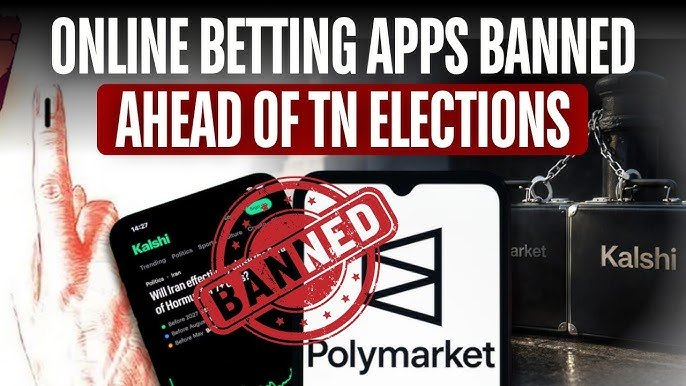
The interesting story of 2026 is not that Kalshi got banned in Nevada. It is that the entire American betting exchange industry looked at state-by-state licensing, decided it was unwinnable, and reinvented itself as a federally regulated derivatives market. Then the states came anyway.
Here is what happened, what it costs you, and what to do if your state is one of the six where the lights are now off.
Below is our list of trustworthy online sports betting sites:

Sportbet.one

MyNitro

BetPhoenix

EveryGame

Bovada
The exchanges did not lose. They defected.
Three years ago the pitch for a betting exchange was simple: you trade against other customers, the platform takes a commission, and because it holds no position it has no reason to throw you out for winning. It was a good pitch. It was also nearly impossible to run profitably across thirty separate state licensing regimes.
- Sporttrade held licences in New Jersey, Arizona, Colorado, Iowa and Virginia. It filed with the federal commodities regulator in February 2026 and wound down its sportsbook operations by that summer. Its chief executive framed the move as a straight upgrade in "efficiency, transparency, and consumer protection."
- Novig started as a licensed exchange in New Jersey and Colorado, detoured through a sweepstakes model in around forty-two states, raised $75 million in February 2026, obtained federal designation in June and relaunched nationwide on 4 August 2026. It now operates in roughly forty-seven states with no commission at all, monetising through a taker fee that tops out at three quarters of a cent per contract.
- ProphetX received its federal designation about five days before Novig and is live in forty-nine states, everywhere except Nevada.
- Smarkets, the London exchange, filed for the same status in March 2026.
Meanwhile the one genuine consumer exchange that Americans might remember has been gone for years. Its New Jersey horse racing exchange closed on 1 October 2020 after handling only $12.4 million in a year, undone by a twelve percent state commission rate and by major tracks refusing to participate. What carries that brand in the US today is a fixed-odds sportsbook with no back-and-lay marketplace at all.
So if you went looking for a US betting exchange in September 2026, you would not find one. You would find prediction markets, which are the same idea wearing a Commodity Futures Trading Commission licence.
Which is exactly when the states arrived
Sports contracts are blocked or heavily restricted in Nevada, Washington, Michigan, Utah, Massachusetts and Ohio. Actively contested with markets still running: New Jersey, Arizona, Maryland, Connecticut, Illinois, Rhode Island, Tennessee, Wisconsin, Minnesota, California and Texas.
By September 2026 nineteen states were in litigation against prediction market operators, and the federal regulator had sued six of them back claiming preemption. On 28 July 2026 a coalition of forty-four state attorneys general wrote to that regulator telling it plainly that it has no statutory authority here. The NFL had sent its own letter the day before.
Nevada, in sequence
Nevada filed a civil enforcement action against Kalshi in February 2026. In May a court ordered it to stop offering covered event contracts to Nevada residents. Kalshi agreed to geofence by 12 August under threat of $120,000 a day.
On 15 August, Nevada moved for contempt, saying investigators kept getting through. The filing noted Kalshi had spent roughly $190,000 building geolocation in house, which the state described as "rudimentary compared to the third-party systems used by licensed sportsbooks." Kalshi called the motion a PR stunt.
Then on 28 August the Ninth Circuit ruled unanimously against it, holding that sports event contracts are likely not "swaps" under the Commodity Exchange Act and that federal exclusive jurisdiction therefore never attaches. The court's framing was not gentle: these are "sports gambling, regardless of whether Kalshi calls them swaps," and "the CFTC is not a national gambling regulator." The panel also quoted Kalshi's own marketing, which had described it as the first app for legal sports betting in all fifty states, back at the company as evidence of what it was selling.
Nevada's Gaming Control Board chairman did not hide his satisfaction: "This completely vindicates what we have been saying all along."
The circuit split, and what happens next
On 6 April 2026 the Third Circuit decided a New Jersey case the other way, holding that these contracts are swaps and that states cannot prohibit them. The Ninth Circuit then held the opposite. That is a clean split on a single statutory question.
New Jersey's attorney general filed a 332-page certiorari petition on 3 September 2026, arguing that "Congress did not silently make the sports-betting industry immune from state law." A federal judge in Utah made the same point more colourfully on 5 August, in the first final merits judgment against Kalshi anywhere, calling it "implausible that Congress would silently reverse course through an Act addressing the 2008 housing financial crisis."
The market's own view is worth noting. After the Ninth Circuit ruling, Polymarket's contract on whether the Supreme Court would take the case moved from 29 percent to 52 percent. One prominent gaming attorney puts the odds that courts ultimately side against prediction markets at seventy to eighty percent. A law professor quoted alongside him called it closer to even.
Translation: nobody knows, your access depends on which federal circuit you live in, and this will probably be settled by nine people in Washington rather than by anything you do.
The regulator who came for the odds format
On 7 August 2026 the federal commodities regulator instructed registered exchanges to stop displaying American odds, on the grounds that showing minus 120 and plus 135 "is likely to mislead market participants about the nature of the transaction." Kalshi dropped American odds on 31 August. A competitor had already done it four days earlier and shipped a conversion calculator to soften the blow.
A federal agency spent part of its summer determining that if a product looks like a sportsbook and prices like a sportsbook, it must at minimum stop writing the numbers like one. One executive predicted that by the end of football season you will prefer percentages. He may well be right, which does not make it a less strange hill.
The cost comparison, done properly
This is the part that actually matters to your bankroll, and both halves of it are true.
The price advantage is real and it compounds
A standard two-way sportsbook line at minus 110 implies 52.38 percent on each side. Add them and you get 104.76 percent. That surplus of roughly 4.5 points is the vig, and you pay it on every bet, winning or losing, forever.
A prediction market charges a visible fee on a contract that, in a liquid market, prices near true probability. The dominant platform's taker fee works out to about 0.07 multiplied by contracts, price, and one minus price. On a fifty cent contract that is roughly 1.75 cents. On a ten cent longshot it is under a penny. Resting limit orders pay about a quarter of that. One of the new entrants charges no commission at all and caps its taker fee at three quarters of a cent per contract.
| Market type | Effective cost to you | Charged on |
|---|---|---|
| Sportsbook, standard minus 110 side | ~4.5% | Every bet, win or lose |
| Sportsbook, parlay | ~20% | Every bet |
| Sportsbook, same-game parlay | 13% rising to 18.5% over four years at one major operator | Every bet |
| Low-margin sportsbook side | ~2 to 3% | Every bet |
| Prediction market, liquid coin-flip market | ~1.75% | Trade fee, both sides |
| Prediction market, resting limit order | ~0.44% | Trade fee |
| Prediction market, thin market with a 12 cent spread | ~12% | The spread, invisibly |
The liquidity problem is equally real
On a marquee NFL moneyline, spreads run one to two cents and the advantage above holds comfortably. On a thin market you might find forty bid against fifty-two ask with a handful of contracts on each side. That twelve cent spread is worse than any vig you have ever paid at a sportsbook, and the midpoint you are staring at is not a price you can trade.
A market with no vig and no volume is a shop window. Before you celebrate the fee schedule, open the order book on the game you actually want to bet, not on the one on television.
The structural difference the industry noticed
Here is a point that gets missed. Sportsbooks make their money disproportionately on parlays: in New Jersey parlays are thirty-two percent of handle and sixty-five percent of revenue, in Maryland thirty-six and sixty-three, in Illinois thirty-one and sixty-one. In Louisiana in one recent month parlays produced about seventy-seven percent of all net sportsbook proceeds.
A prediction market charges roughly the same fee on a parlay-style combination as on a single contract. There is no margin escalation on combinations, which means the entire profit engine of the modern American sportsbook does not exist on these platforms. That is genuinely good for you and genuinely difficult for them, and it is why the economics of prediction markets still lag sportsbooks despite the volume.
What you give up
- Parlays as you know them. Combination products only bundle markets already published on that game's menu, and they are priced by request for quote from market makers rather than instantly by formula. Many show no live price at all. If parlays are why you bet, this is not a substitute.
- Promotions. No deposit matches, no odds boosts, no free bets. The absence of a welcome offer is the flip side of never being limited.
- Depth. Prop menus and live markets are thinner than a major sportsbook's and availability shifts week to week.
- Speed to cash. An ACH withdrawal realistically runs seven to nine business days end to end, and winning does not reset that clock. It is governed by your original deposit's settlement timeline, which surprises nearly everyone once.
Settlement risk, which nobody mentions until it happens
In February 2026 Kalshi ran a market on whether Iran's Supreme Leader would step down. It took roughly fifty-four million dollars in volume. When Khamenei was reported dead on 28 February, holders of the yes side expected a dollar. Kalshi instead settled at the last traded price before the death, citing a carve-out, with conflicting language between its regulatory filing and the user-facing market page. Two months earlier it had settled a Jimmy Carter death market cleanly.
The line that went round summed it up: you settle on death, just not when it makes you money. Kalshi responded by refunding trading fees to affected self-clearing retail traders, reportedly the third revision of its settlement rules in about eighteen months.
Sportsbooks have grading disputes too, and anyone who has argued about a voided bet knows the feeling. The difference is that a sportsbook's house rules have been litigated for decades and a state regulator will hear your complaint. Contract settlement language on a two-year-old market is a much thinner body of precedent, and you are the one finding the edges.
The tax question is genuinely unresolved
There is no IRS guidance classifying prediction market contracts. Tax professionals are working from three incompatible frameworks:
| Treatment | How it works | Catch |
|---|---|---|
| Gambling income | Gross winnings on Schedule 1, losses deductible only if you itemise | Losses now capped at 90% of winnings under the rule effective for tax year 2026 |
| Capital gains | Form 8949, net gains and losses, no itemising required | Most common in practice, least tested |
| Section 1256 | Sixty-forty blended rate regardless of holding period | Argued because these are federally regulated markets; many practitioners think it does not apply and the IRS has said nothing |
Meanwhile the main platform does not provide comprehensive 1099-B coverage, the offshore-origin platform issues none, and brokerages do not issue 1099s for event contract trades either. You are self-reporting under whichever theory your accountant prefers, with no form to check your work against. The standard professional advice is to pick an approach, apply it consistently across every trade and document why. That being the best available guidance tells you exactly where this stands.
Where the money goes when a state goes dark
Match the destination to what you actually valued.
If you were there for the price
Reduced juice. Books that price at minus 105 rather than minus 110 capture most of the prediction market's economic advantage without the liquidity cliff, and they take real money on games nobody is watching. The break-even win rate falls from 52.38 percent to 51.22 percent, which is a bigger swing than most bettors' entire edge.
If you were there because nobody limited you
You want a book whose profit does not depend on your losing, which is a real category with real economics rather than a marketing line.
If you were there for the breadth of markets
Offshore books have priced politics, entertainment and novelty markets for twenty years, long before anyone coined the phrase event contract. The Oscars and elections have been on those boards since before Kalshi existed.
If you were there for the regulatory comfort
There is no substitute and you should probably wait. There is a petition in front of the Supreme Court. That is the honest answer even though it is not a useful one.
One thing to take away
Prediction markets did not grow because of the technology. They grew because they answered two complaints the regulated sportsbook industry never bothered to address: the price is too high and winners get thrown out. An offshore market study this year found regulated prediction markets growing 4.8 times faster than offshore ones, with the offshore share of turnover falling from eighty-four percent to fifty-four percent, which is what happens when a legal product finally solves a real problem.
Whatever the Supreme Court decides, those two complaints survive the ruling. Work out which of them you care about and shop on that basis, because the label on the product matters much less than the price and the policy behind it.